- Feb 4
Unlocking the Future of Development: Agentic Coding in Xcode
- Robert Petras
- Apple Intelligence
If you’re an Apple app developer, buckle up — the future just arrived. With the release of Xcode 26.3, Apple has introduced agentic coding, a powerful new approach that goes far beyond traditional autocomplete and code suggestions. This update isn’t just an incremental improvement; it’s a meaningful leap toward a more intelligent, collaborative development experience.
What Agentic Coding Really Means?
Agentic coding brings proactive, goal-oriented AI agents directly into Xcode. Instead of passively responding with snippets or suggestions, these agents can take initiative and perform real development tasks on your behalf.
With agentic coding, agents can:
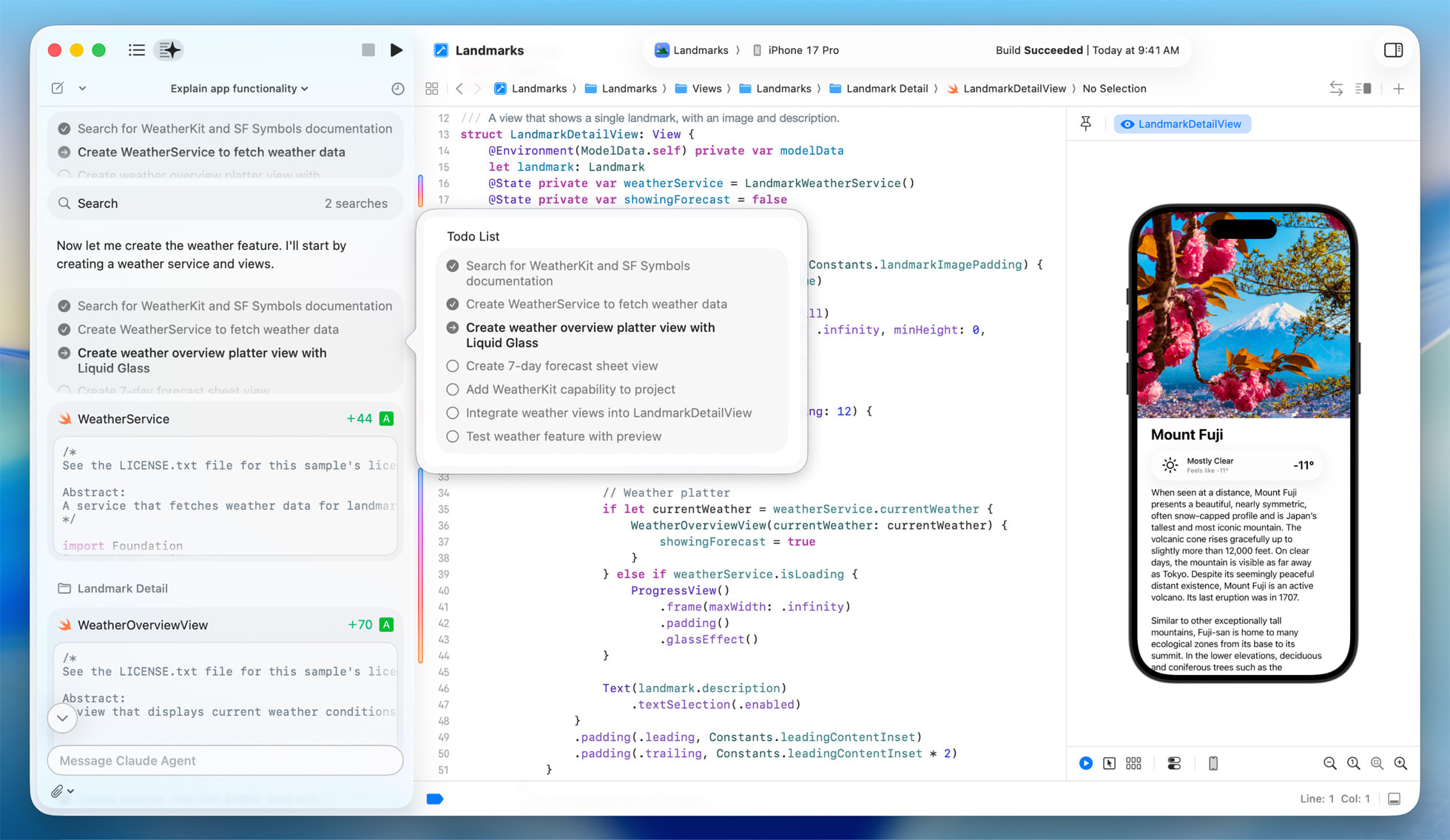
Break down high-level goals into concrete development steps
Understand your project’s structure, files, and metadata
Modify code, update project settings, and manage files
Run builds and tests to validate changes
Search Apple documentation contextually and apply best practices
Use Xcode Previews to visually verify UI changes and iterate as needed
This marks a shift from reactive coding assistance to true collaboration. Developers can focus on design, architecture, and creative problem-solving while agents handle repetitive or time-consuming workflows.
A Deeply Integrated Developer Experience
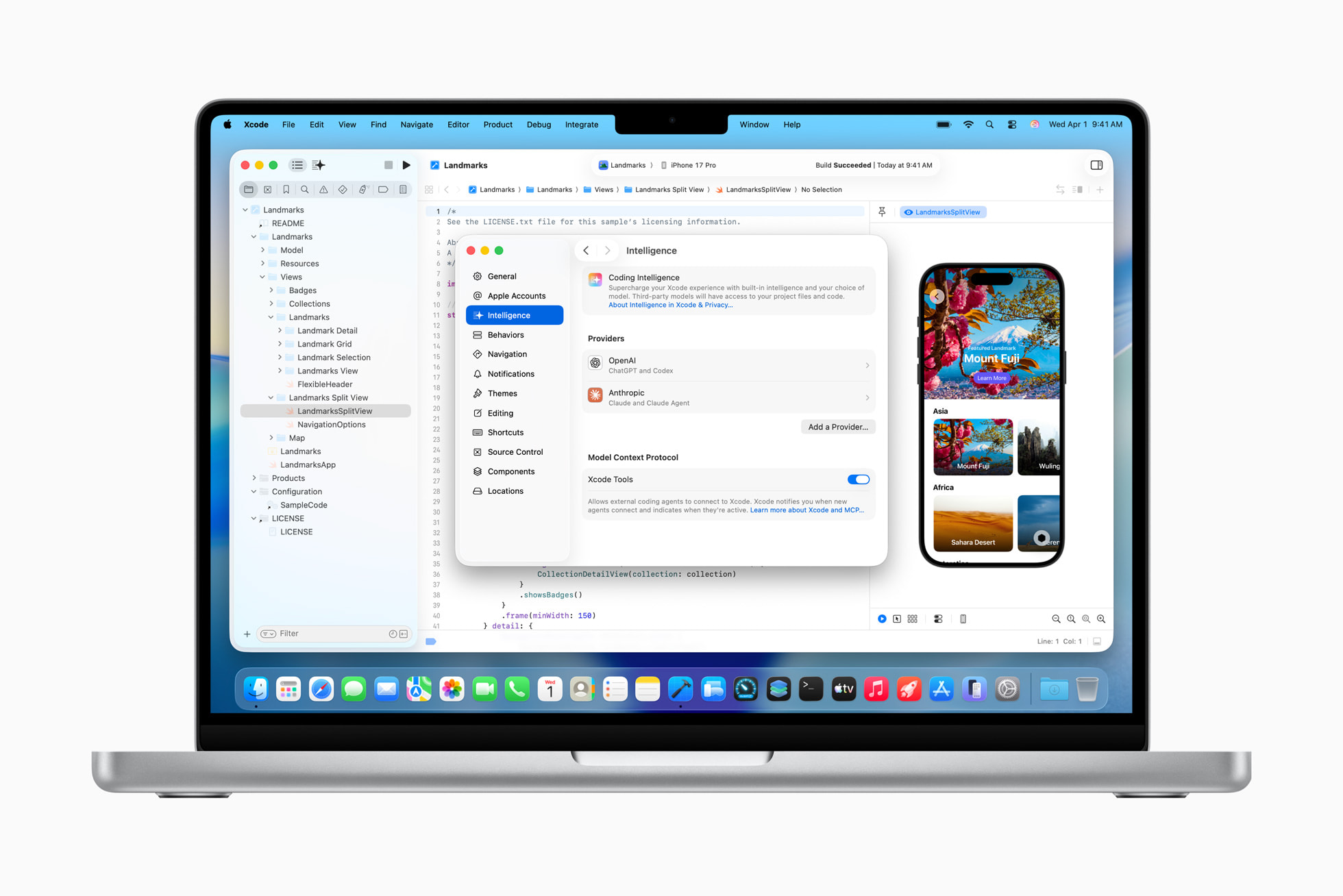
What truly sets agentic coding apart is how seamlessly it’s integrated into Xcode. Apple built this functionality using the Model Context Protocol (MCP), an open standard that allows AI agents to interact directly with Xcode’s tools, project data, and documentation.
This means developers aren’t locked into a single model. You can choose from supported agents—such as Anthropic’s Claude or OpenAI’s Codex—based on your preferences and workflow. The result is a flexible, extensible system that fits naturally into the way you already build apps.

Why This Matters for Apple Developers?
Agentic coding has immediate, practical benefits for developers at every level:
Faster iteration: Agents can generate code, run tests, fix issues, and refine UI with minimal manual input
Smarter debugging: Instead of just pointing out errors, agents can propose fixes and validate them
Continuous learning: Context-aware insights and documentation appear directly in your workflow
Transparent collaboration: A clear transcript shows what the agent did and why, keeping developers in full control
Whether you’re experimenting with SwiftUI, maintaining a large production app, or exploring new platforms like visionOS, these tools are designed to scale with your ambitions.
The Bigger Picture
With Xcode 26.3, Apple is signaling a clear vision for the future of development tools. This is not about replacing developers; it’s about amplifying their capabilities. Agentic coding turns Xcode into an intelligent partner—one that understands your intent and helps carry it forward.
This release represents a foundational step toward more autonomous, efficient, and creative software development. And if this is the starting point, the road ahead looks incredibly promising.
Now is the perfect time to explore agentic coding in Xcode and reimagine what your development workflow can be. The future of Apple app development is here—and it’s ready to work with you.
Agentic coding in Xcode 26.3 is a new capability that allows developers to build apps using autonomous coding agents, such as Anthropic’s Claude Agent and OpenAI’s Codex, directly within the IDE. Unlike standard code completion, these agents can tackle complex tasks with a high degree of independence, working toward a developer's specific goals by making architectural decisions and leveraging built-in development tools.
The Power of Autonomous Agents
With the release of Xcode 26.3, the development lifecycle is streamlined through the collaboration of advanced reasoning models. These agents go beyond simple text generation; they can:
Deconstruct Tasks: Break down broad developer goals into actionable steps.
Navigate Projects: Explore file structures and search through documentation.
Manage Settings: Update project configurations automatically.
Self-Verify: Use Xcode Previews to visually verify their work and iterate through builds and fixes until the code is correct.
Hybrid Intelligence: On-Device and Cloud Models
Xcode provides a flexible ecosystem that combines local efficiency with cloud-based power:
On-Device Predictive Completion: Powered by Apple silicon, a machine learning model specifically trained for Swift and Apple SDKs provides real-time, intelligent suggestions based on your unique coding style.
Advanced Coding Agents: Developers can choose the large language model (LLM) that best fits their project, including the high-level reasoning models from Anthropic and OpenAI.
Coding Tools: This feature brings the functionality of Apple's "Writing Tools" to the source editor, helping developers write documentation and fix errors directly in the code.
Open Standards and Flexibility
A standout feature of this update is Apple’s commitment to flexibility through the Model Context Protocol (MCP). This is an open standard that allows developers to integrate any compatible agent or tool with Xcode, ensuring they are not locked into a single provider.
BUILD BETTER APPLE APPS
Modern Apple development, explained. SwiftUI, Apple Intelligence, app development, and UI/UX — clear insights, no fluff.
Credo Membership • $5 / month
- Includes 5 private spaces
We provide structured learning, an educational approach in which knowledge and skills are taught in a clear, organized, step-by-step way, rather than randomly or solely through exploration.
Clear goals → you know exactly what you’re supposed to learn
Logical sequence → concepts build from simple → complex
Planned instruction → lessons follow a curriculum or framework
Guidance from a teacher/system → not just trial and error
Regular practice & feedback → to reinforce understanding